
SURGERY
A surgery adapted to each patient
Visceral surgery in Nyon cannot be reduced to the choice of a technique.
Every situation first requires an individual assessment that takes into account the condition, the symptoms, the examinations performed, the patient’s medical history, personal characteristics, and the different therapeutic options available.
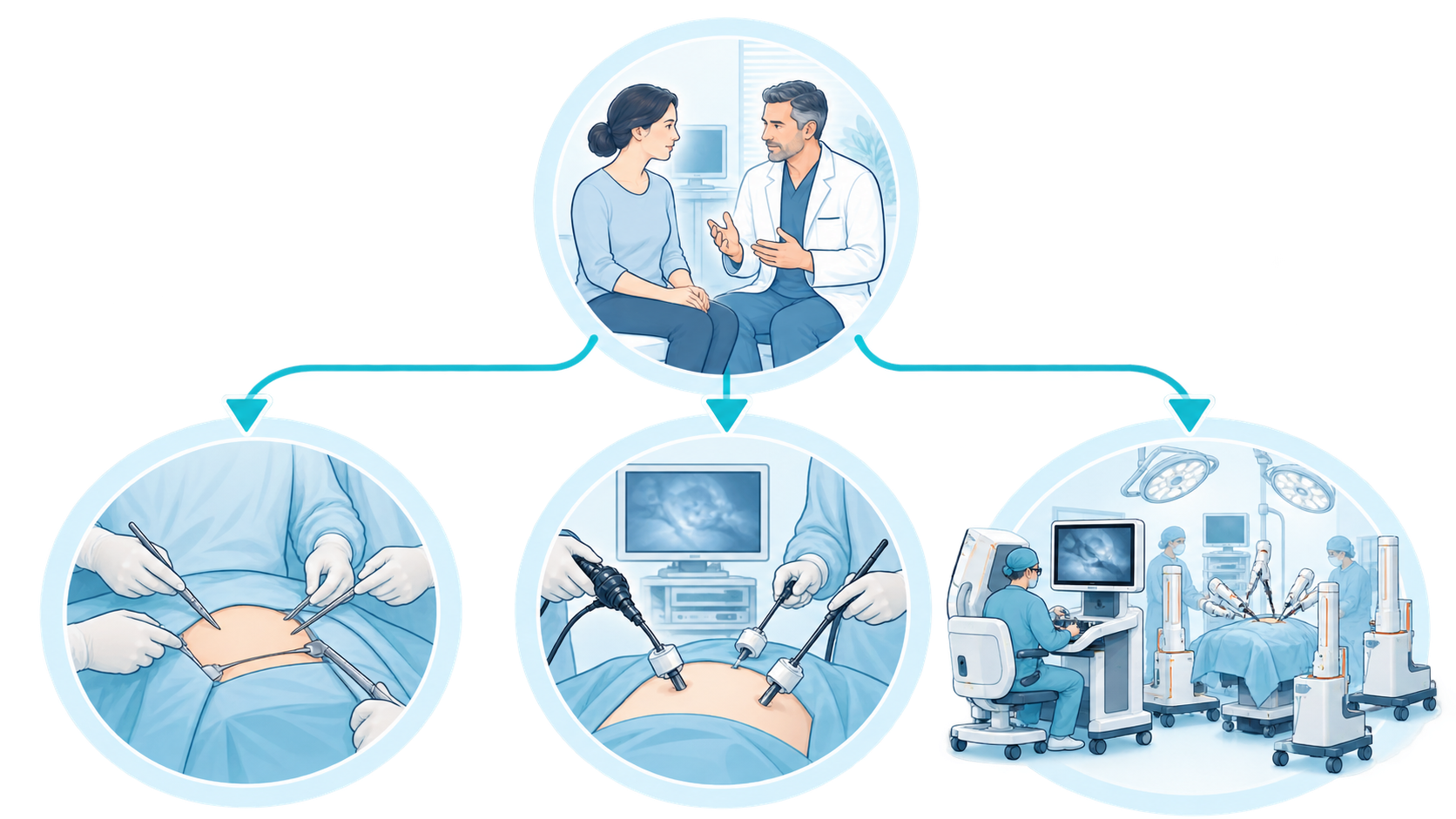
When an operation is indicated, several surgical approaches may be considered depending on the situation: conventional open surgery, laparoscopy, or robot-assisted surgery.
The choice of surgical approach is an integral part of the overall surgical strategy.

Surgery is not an automatic answer
Before considering any technique, the first question is always whether surgery is actually indicated.
This decision is based on a precise medical evaluation: the nature and severity of the condition, the symptoms experienced by the patient, the results of the examinations performed, and the available non-surgical treatment options.
In some cases, monitoring or a non-surgical treatment is the most appropriate option.
In others, surgery is the option that offers the patient the best benefit.
This assessment is made jointly with the patient, in a shared and transparent decision-making process.
The same operation can sometimes be performed using different approaches
Once an operation is indicated, it can often be performed using several surgical techniques. The choice of approach is made individually, based on the condition, the operation planned, and the patient’s characteristics.
Conventional open surgery: the surgeon operates through a direct incision. This approach remains fully valid and is sometimes the most appropriate, particularly in certain complex or emergency situations.
Laparoscopic surgery: the surgeon operates through small incisions using a camera and long instruments, without opening the abdominal wall.
Robot-assisted surgery: the surgeon operates via a console that precisely controls robotic instruments, while remaining the one directing the entire procedure.
None of these approaches is superior in every situation: each has its own indications, and the choice depends on the specific case.
Different ways of accessing the operative area
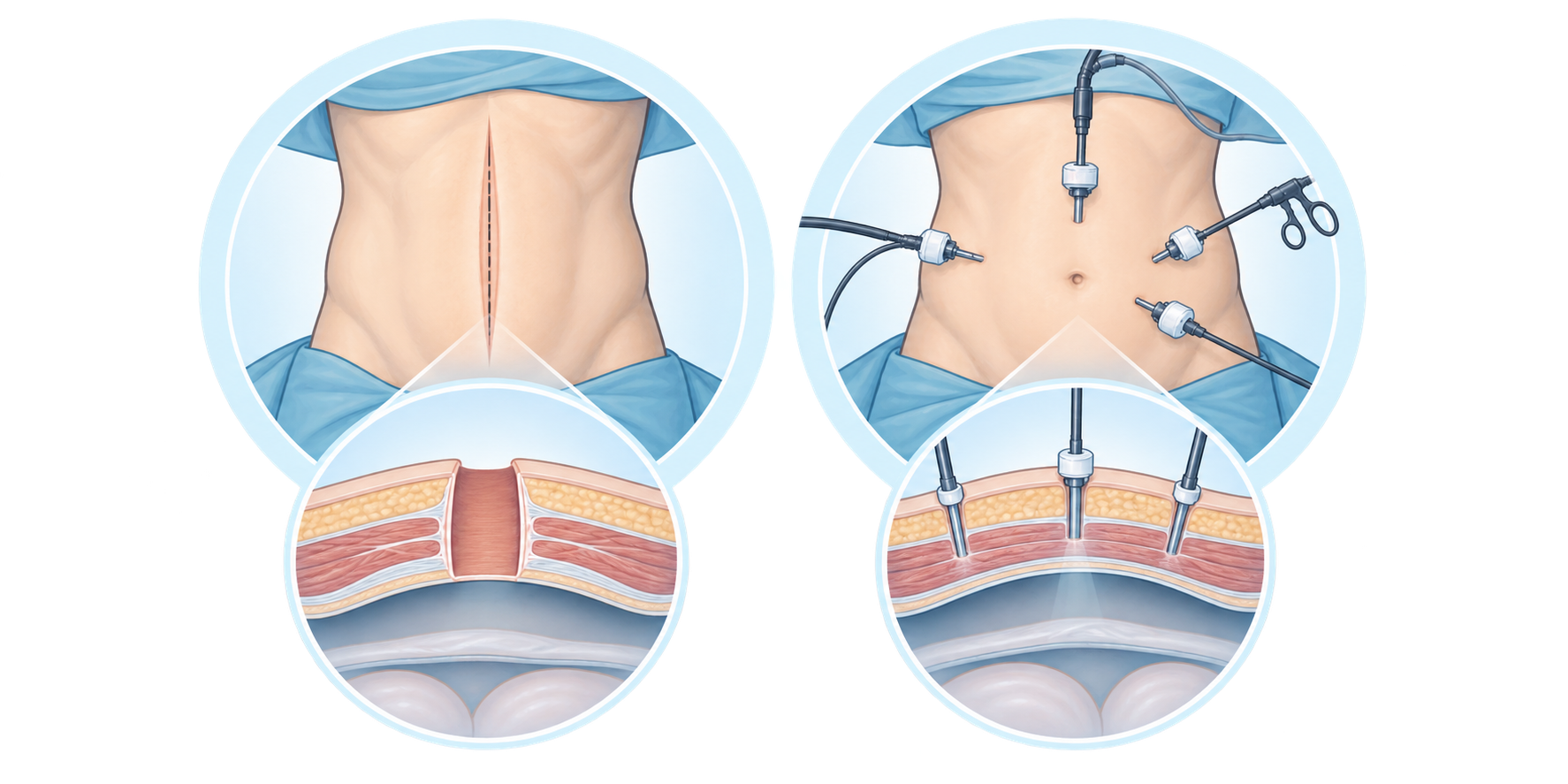
Beyond the choice of technique, surgical approaches also differ in how they access the operative area.
In conventional surgery, access is made through a single, generally larger incision, allowing the surgeon to operate directly with their hands.
In minimally invasive surgery (laparoscopy or robot-assisted surgery), access is made through several small incisions, through which a camera and fine instruments are introduced.
This difference in access affects the appearance of the incisions but not the rigor of the procedure itself.
In visceral surgery, the choice depends on the clinical situation and is made by the surgeon according to each patient’s specific case.
Minimally invasive surgery by laparoscopy
Laparoscopy is a minimally invasive surgical technique that has been used and refined for several decades.
The surgeon operates through a few small incisions, using a camera that projects the image onto a screen and long instruments handled directly by hand.
This technique allows many abdominal procedures to be performed with smaller incisions than in conventional surgery.
It remains, today, one of the standard approaches for a large number of visceral surgery procedures, a field represented in Switzerland by the Swiss Visceral Surgeons society.
Another minimally invasive surgical modality
Robot-assisted surgery is another form of minimally invasive surgery. It also uses small incisions, but the instruments are controlled through a robotic system directed by the surgeon.
This technology does not replace the surgeon’s judgment or skill: it is a tool that translates the surgeon’s movements into precise instrument motions.
The surgeon remains in control of the procedure at all times.
A system directly controlled by the surgeon
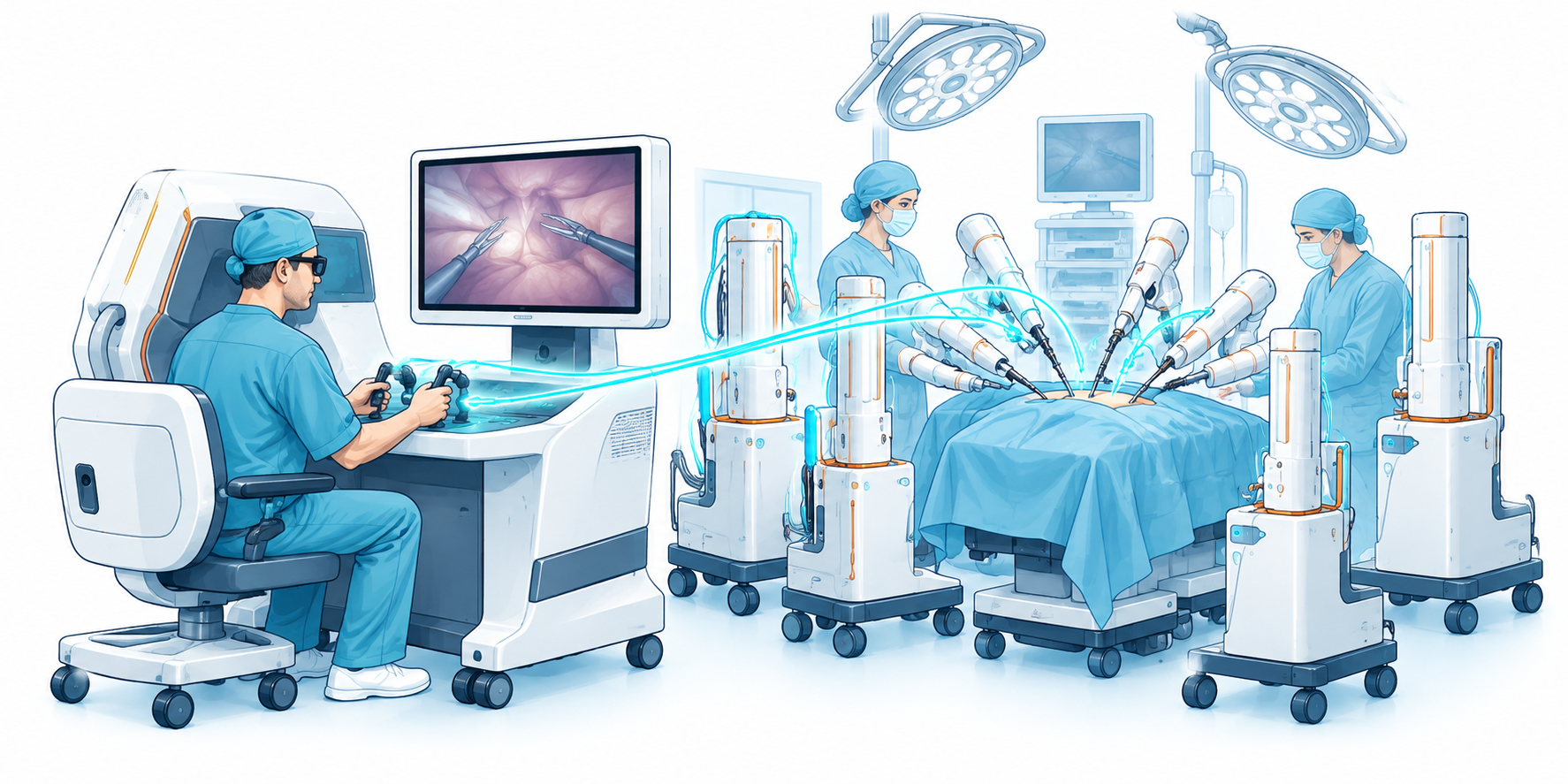
The Hugo™ RAS system used at the practice is an open-console robot-assisted surgery platform.
The surgeon sits at an external console, viewing the operative field on a screen through 3D glasses, and directs the instruments manually via dedicated controls.
This open configuration keeps the surgeon at the console in the same room, in direct communication with the rest of the team in contact with the patient, who remain present at the operating table throughout the procedure.
Independent robotic arms positioned around the patient
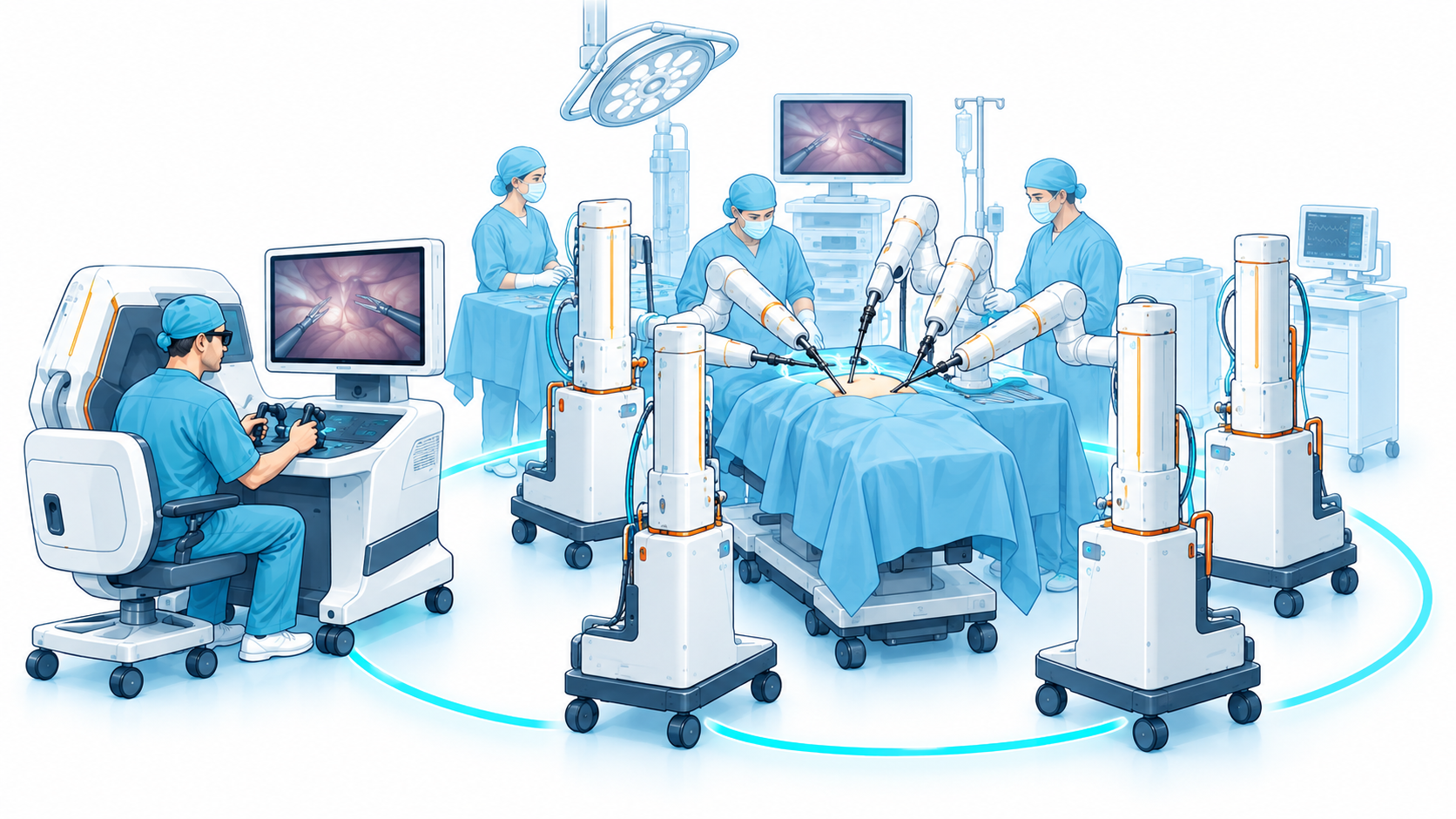
The Hugo™ RAS system is based on a modular architecture: each robotic arm is mounted on its own independent cart, positioned around the operating table according to the needs of the procedure.
This configuration differs from other systems in which the arms are fused onto a single central unit.
The modular architecture allows the arms to be arranged flexibly depending on the type of intervention and the patient’s anatomy.
Regardless of the configuration used, the surgeon remains, at every moment, the one directing the entire procedure from the console.
A decision adapted to the procedure and the patient
The choice between open surgery, laparoscopy, and robot-assisted surgery is not based on a preference for one technology over another.
It depends on several factors: the type of operation planned, the complexity of the case, the patient’s anatomy and medical history, and the specific constraints of the procedure.
For a given operation, one approach may be more suitable than another in one patient, and a different approach may be more appropriate in another.
This is why the choice of approach is made case by case, by the surgeon, as part of the overall surgical strategy.
Technology remains a tool in service of the surgical strategy.
From consultation to postoperative recovery
Consultation: the process begins with a detailed clinical evaluation, during which the diagnosis is established and the different therapeutic options are discussed with the patient.
Preparation: once surgery is decided, the necessary preoperative examinations and consultations are organized to prepare the patient under the best possible conditions.
The operation: the procedure is carried out using the approach chosen beforehand, according to the surgical strategy defined for that specific case.
After the operation: postoperative follow-up allows recovery to be monitored and ensures a return to daily activities under the best possible conditions.

Technology in service of a medical decision
Whether performed via open surgery, laparoscopy, or robot-assisted surgery, a procedure is always guided by the same medical rigor.
No technique is presented here as superior to another in absolute terms: each has its own place, depending on the situation.
The Hugo™ RAS system is one of the tools available today to perform certain minimally invasive procedures, in addition to conventional and laparoscopic approaches.
Its use does not change the fundamental principle that guides every decision: choosing, for each patient, the approach best suited to their specific case.
The surgical technique is chosen based on the patient, the condition, and the procedure being considered.
Discuss your situation in a consultation
Every surgical situation is unique. A consultation in Nyon allows your specific case to be assessed and the most appropriate approach to be discussed together.