
PROCTOLOGY
Anal fissure
A common cause of pain during bowel movements
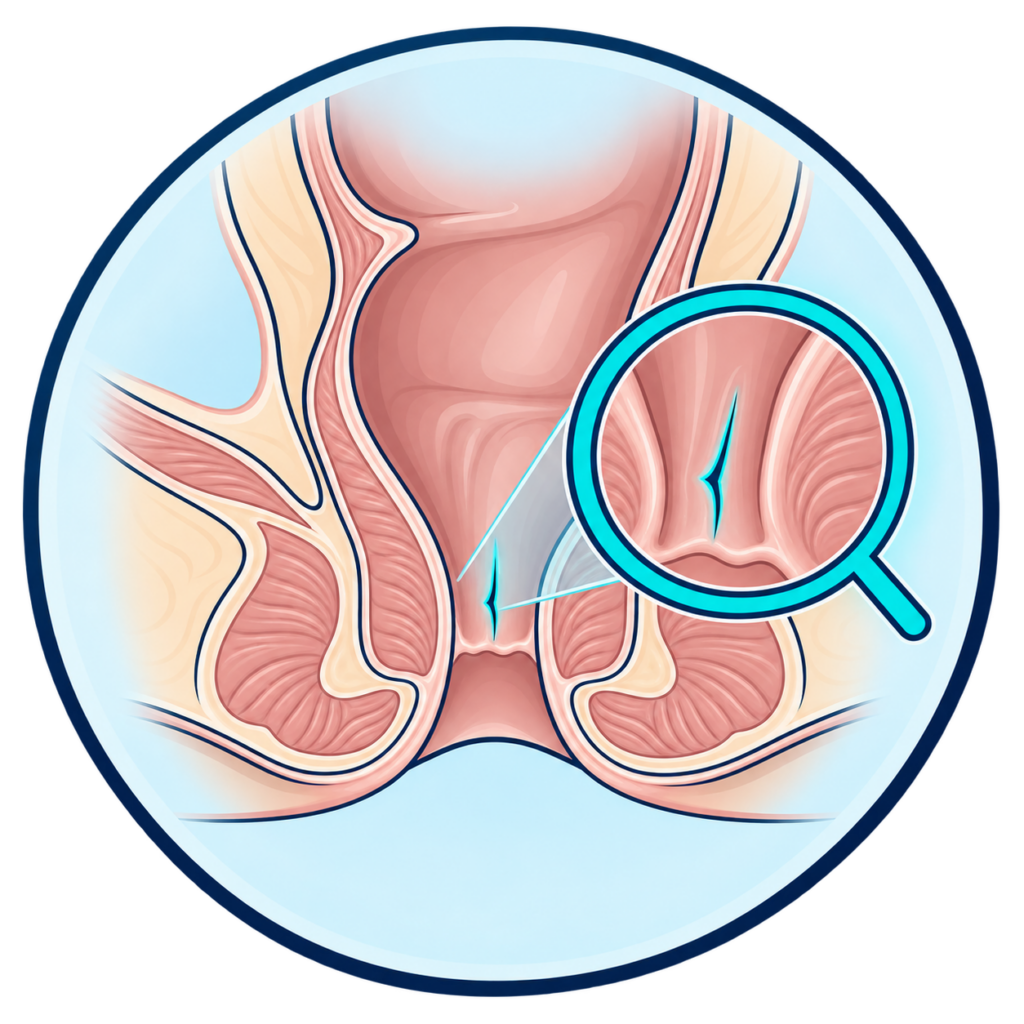
An anal fissure is a small tear in the lining of the anal canal.
It typically causes sharp pain during or after a bowel movement, sometimes accompanied by minor bleeding.
A recent fissure can often heal with simple measures to regulate bowel habits.
When it becomes chronic, spasm of the internal anal sphincter can perpetuate pain and prevent normal healing.
Treatment then aims to break this cycle while preserving sphincter function.
What is an anal fissure?
A small wound in the anal canal
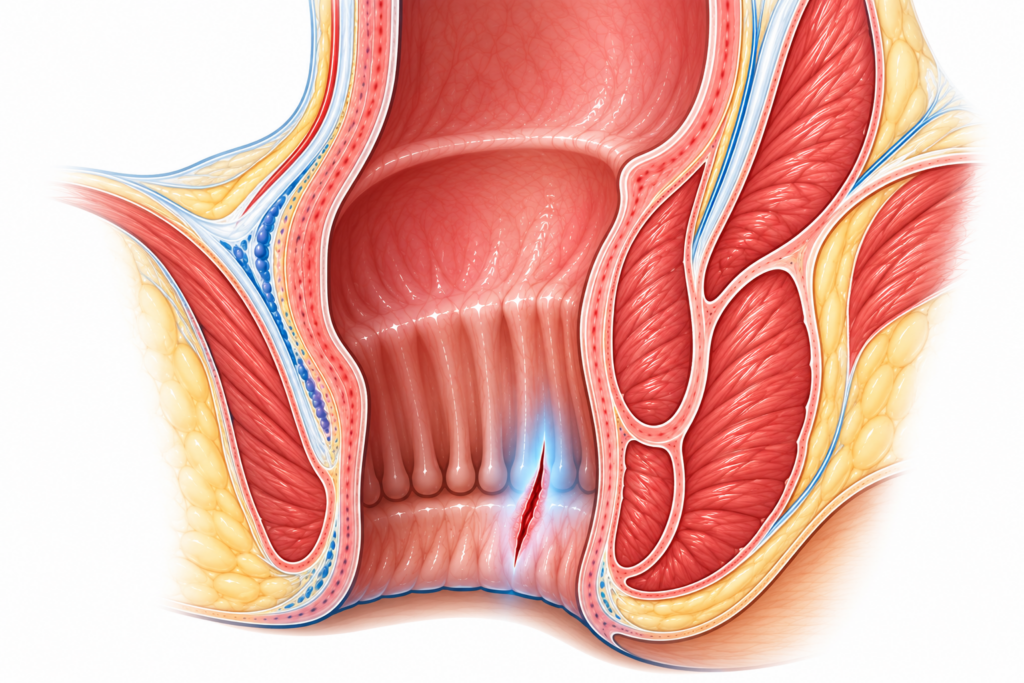
An anal fissure is a linear tear in the lining of the anal canal.
It often develops after passing a hard or large stool, but episodes of diarrhoea or local trauma can also contribute.
The fissure is most commonly located in the posterior midline.
Its small size often contrasts with the intensity of the pain.
The reason is anatomical: the lower part of the anal canal is particularly sensitive.
Why does a fissure hurt so much?
Pain, muscle contraction and healing
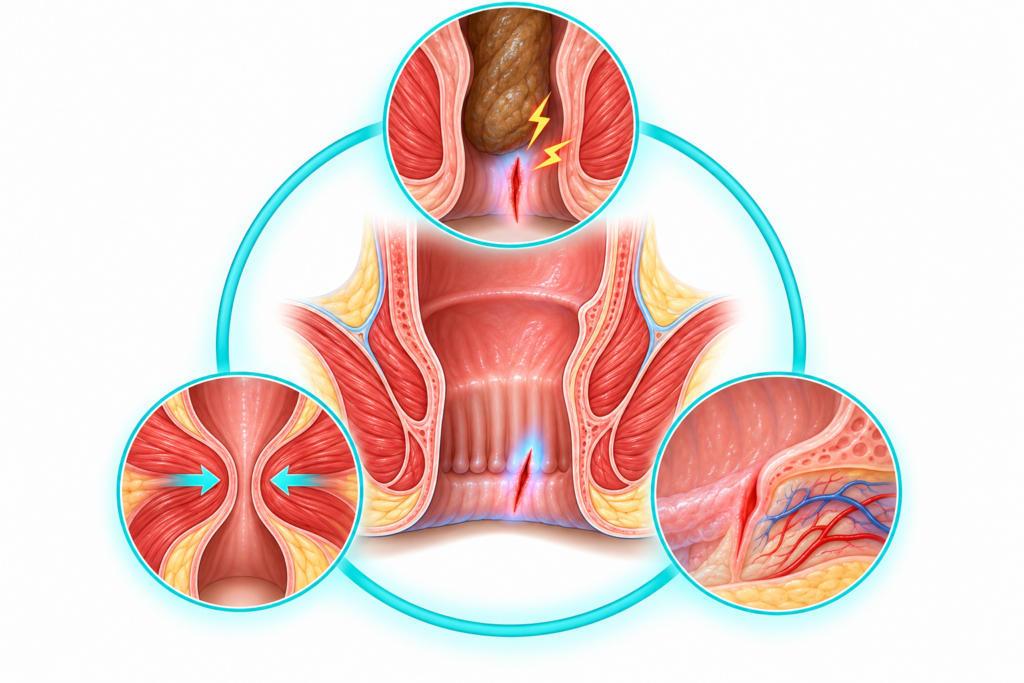
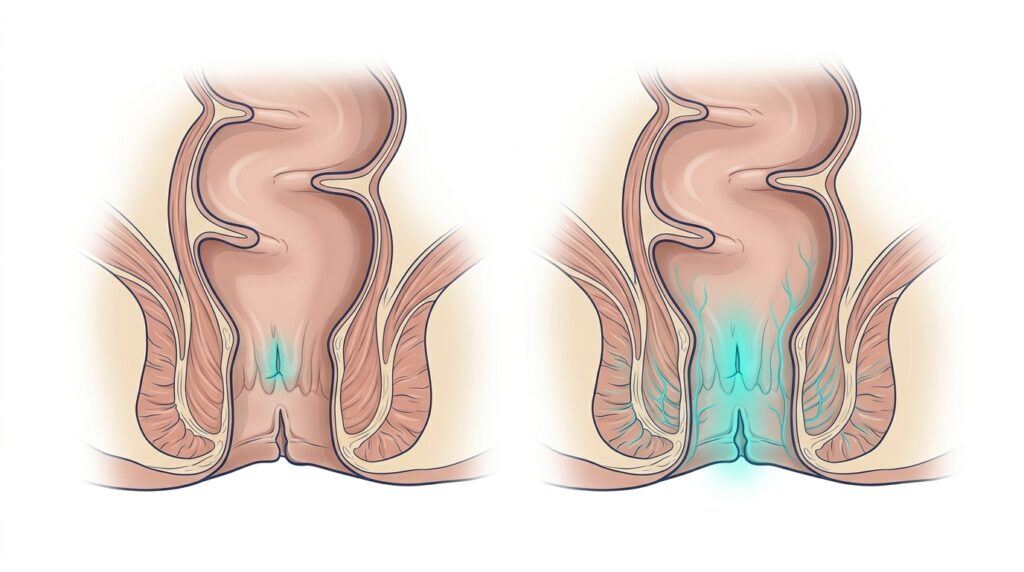
Passing stool stretches the fissure.
This can trigger sharp pain and cause a reflex contraction of the internal anal sphincter.
In some patients, this increased sphincter tone persists.
The elevated pressure can reduce local blood flow and contribute to persistence of the fissure.
A cycle can gradually develop:
bowel movement → pain → sphincter spasm → reduced local blood flow → impaired healing → further pain.
This is one of the fundamental mechanisms underlying chronic anal fissure.
What are the symptoms?
A characteristic pattern of pain
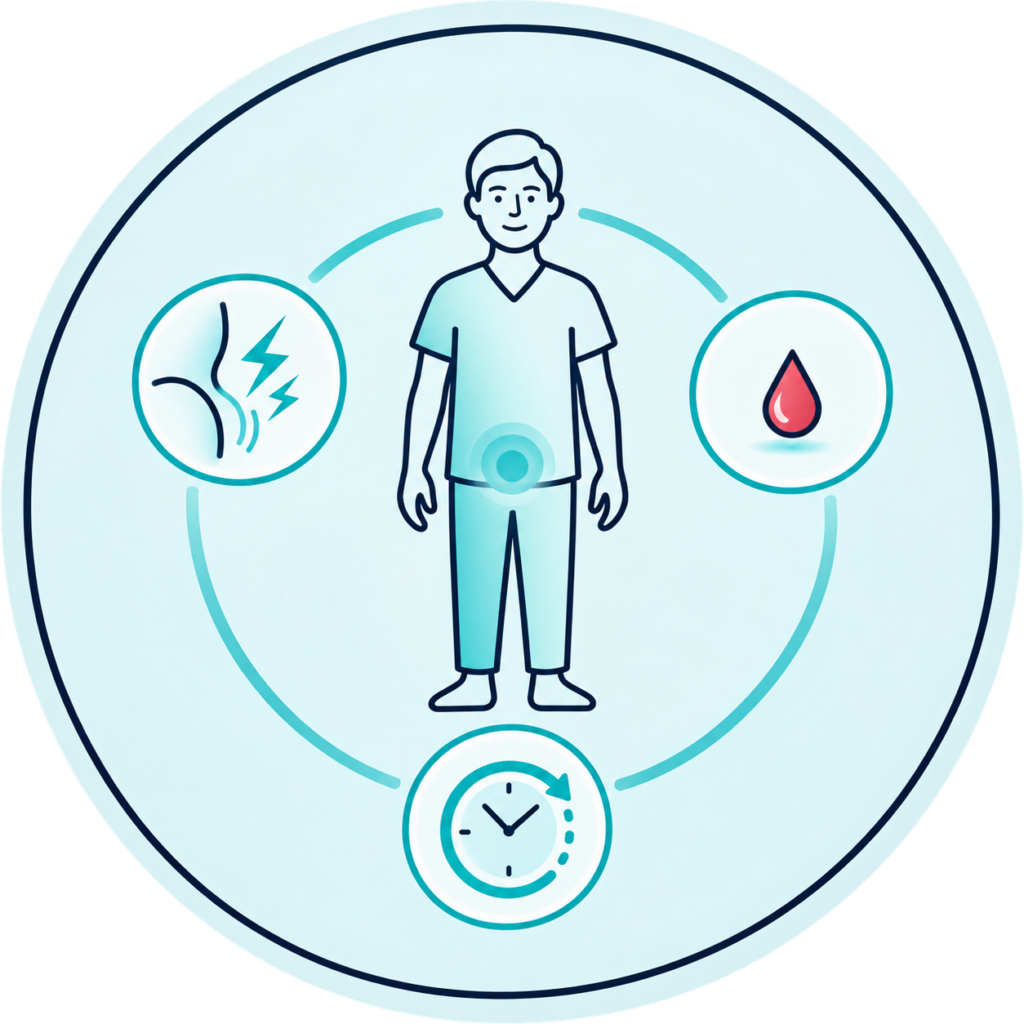
The most suggestive symptom is pain during a bowel movement.
It may feel like a cut or a tear.
The pain may:
- begin while passing stool;
- persist afterwards for several minutes or hours;
- recur with every bowel movement;
- sometimes make going to the toilet feel daunting.
A small amount of bright red bleeding may also occur.
However, anal pain does not automatically mean there is a fissure.
Acute or chronic fissure?
Appearance and progression differ
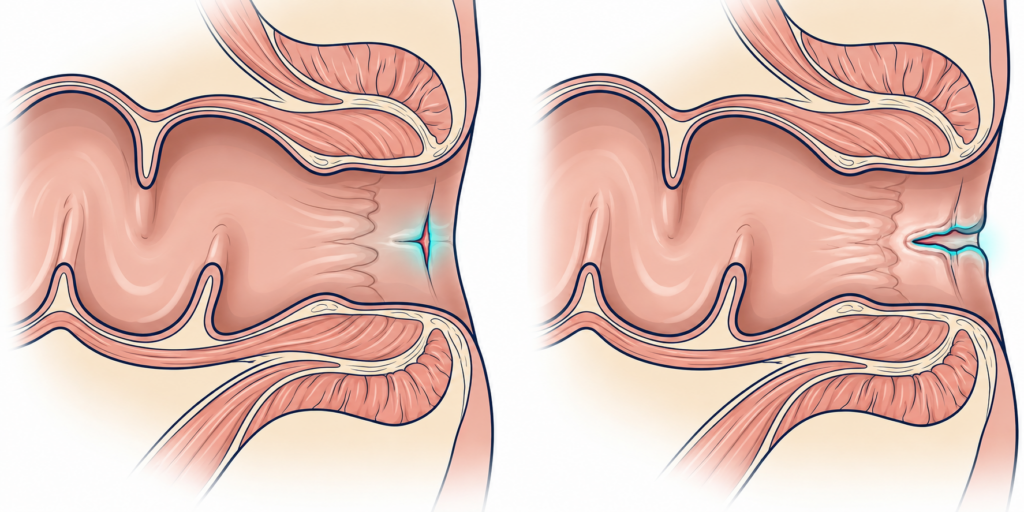
A recent fissure usually looks like a small superficial tear.
It may heal once the trauma stops and bowel habits are adequately regulated.
If the fissure persists, it may develop features of chronicity.
The wound becomes more established and may be accompanied by local changes such as thickened edges or a small sentinel skin tag.
Treatment therefore depends not only on the symptoms, but also on the duration and appearance of the fissure.
How is the diagnosis made?
Clinical examination is usually central
Diagnosis is based mainly on symptoms and a proctological examination.
The characteristic appearance of a fissure can often be identified through careful inspection.
When pain is severe, the examination should be adapted to avoid causing unnecessary additional pain.
Depending on the circumstances, further investigations may be indicated when symptoms or the location are atypical, or when another condition needs to be excluded.
A fissure that is atypical, occurs at multiple sites or fails to heal despite appropriate treatment warrants a specific assessment.
Certain inflammatory, infectious or, less commonly, tumour-related conditions can cause lesions that resemble a fissure.
First step: restore comfortable bowel movements
Reduce trauma when passing stool
The initial aim of treatment for a recent fissure is to achieve stools that are soft, formed and easy to pass.
Depending on the situation, this may involve:
- an appropriate intake of fibre;
- adequate hydration;
- treating constipation;
- medication to soften stools, if needed;
- addressing repeated episodes of diarrhoea when they contribute to the problem.
Warm baths may also improve comfort for some patients.
The aim is to prevent each bowel movement from causing further trauma to the healing area.
Most acute fissures do not require surgery.

Relaxing the sphincter to promote healing
The principle of “chemical sphincterotomy”
Once a fissure becomes chronic, regulating bowel habits may no longer be sufficient.
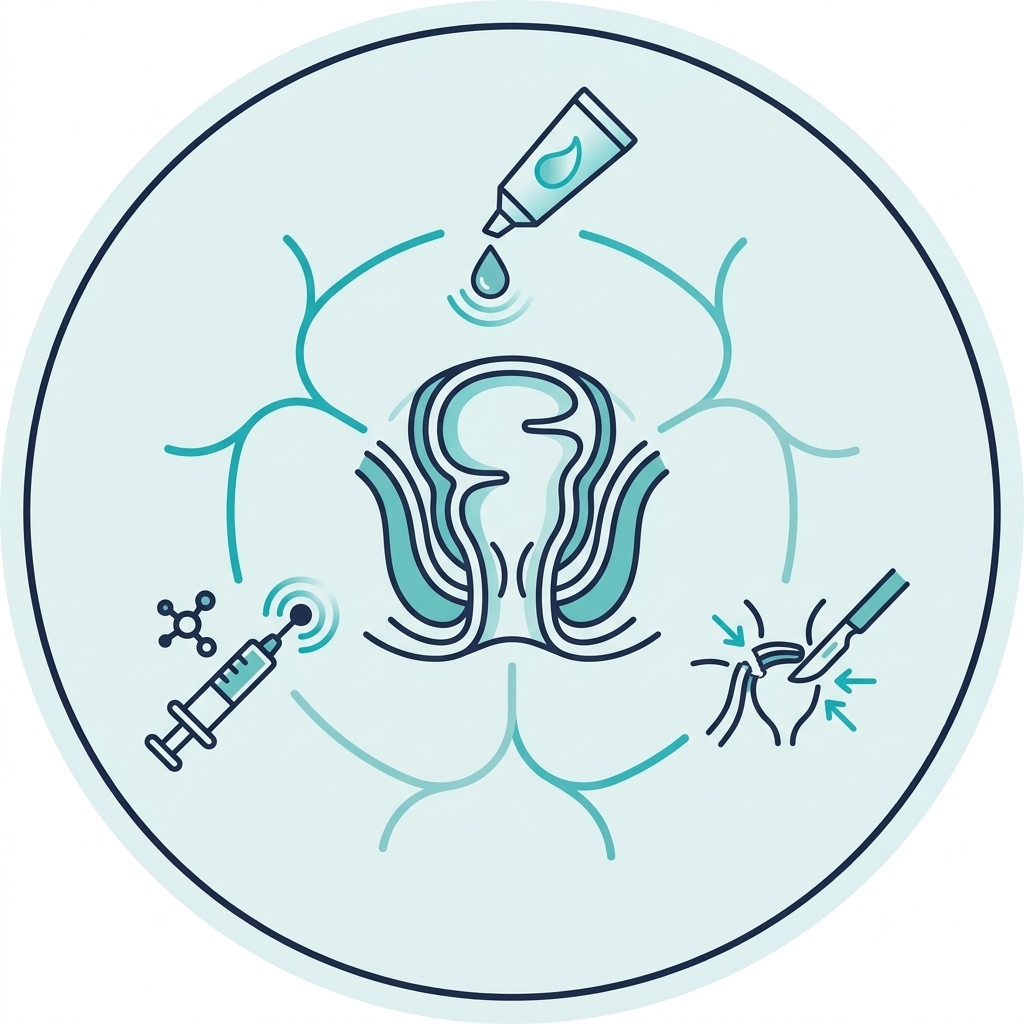
Topical treatments may then be prescribed to temporarily reduce pressure in the internal anal sphincter.
Treatments used include certain topical calcium channel blockers and nitrates.
The aim is not simply to mask the pain.
By reducing increased sphincter tone, treatment seeks to improve the conditions that allow the fissure to heal.
In the ASCRS guidelines, topical calcium channel blockers have efficacy comparable to nitrates, with a generally more favourable side-effect profile. Nitrates can, in particular, cause headaches.
Botulinum toxin
Temporary relaxation of the sphincter
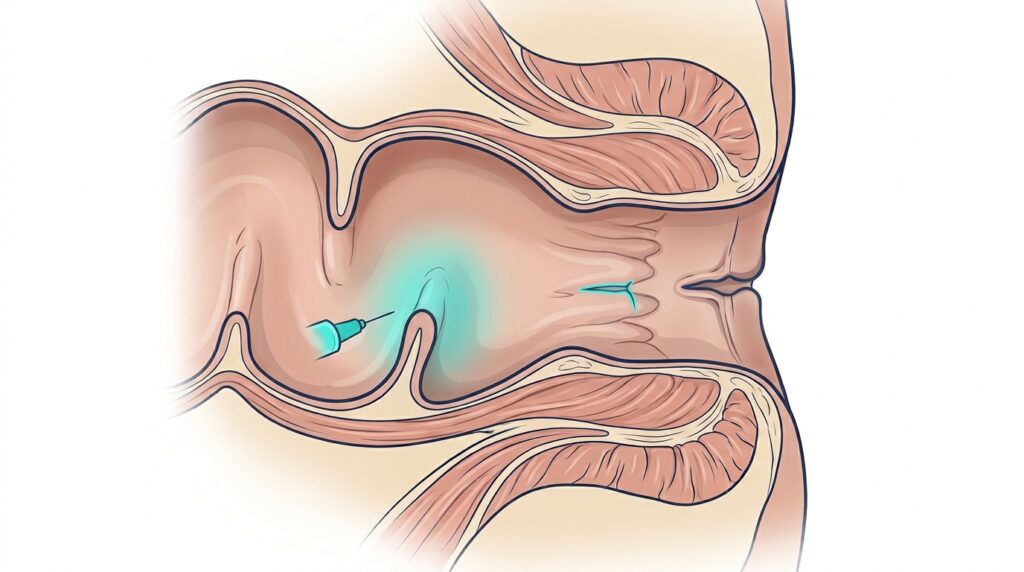
Botulinum toxin can be injected into the sphincter to produce a temporary reduction in its muscle activity.
This relaxation aims to break the cycle maintained by increased sphincter tone and allow the fissure to heal.
It does not involve removing the fissure.
The toxin acts temporarily on the muscle while healing takes place gradually.
Overall, botulinum toxin has results comparable to topical treatments as first-line treatment for chronic fissure and may provide benefit as a second-line treatment after topical treatment has failed. Injection protocols are not fully standardised.
Lateral internal sphincterotomy
A highly effective procedure in appropriately selected patients
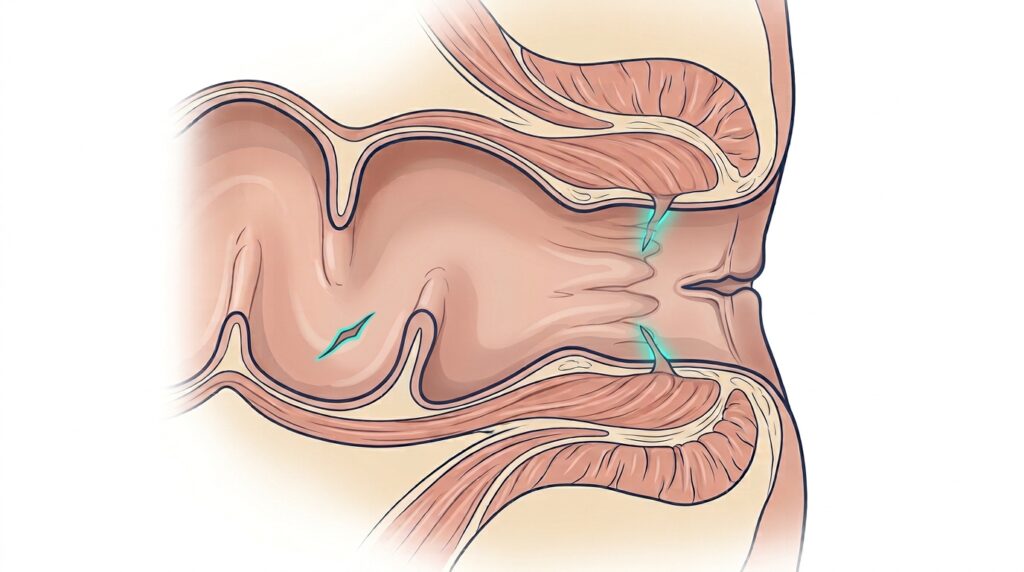
When a chronic fissure persists, lateral internal sphincterotomy may be considered.
The procedure involves a controlled division of part of the internal anal sphincter.
This permanent, carefully controlled reduction in sphincter pressure improves the conditions for healing.
It is important to understand that:
the fissure is not simply “cut out” or removed.
The procedure primarily addresses the mechanism that maintains the fissure.
In selected patients without pre-existing continence problems, lateral internal sphincterotomy is the standard surgical treatment for chronic fissure and has very high healing rates.
Why is sphincterotomy not offered to everyone?
Effectiveness and preservation of continence must be considered together
The anal sphincter contributes to continence.
Any procedure that changes its anatomy should therefore be proposed only after an individual assessment.
Sphincterotomy is particularly effective, but its main functional risk is a change in the ability to control wind or stools.
Particular caution is needed when there is already:
- a continence problem;
- a known sphincter injury;
- a relevant obstetric history;
- previous anorectal surgery;
- certain intestinal diseases.
The ASCRS guidelines emphasise this selection process. They also indicate that a sphincterotomy tailored to the length of the fissure can maintain effectiveness similar to conventional sphincterotomy while reducing the risk of incontinence.
The aim is not only to heal the fissure, but to treat it while preserving anorectal function as much as possible.
Are there alternative surgical options?
The strategy depends on anatomy and functional risk
In some patients, surgically reducing internal sphincter function is undesirable.
Other approaches may then be discussed.
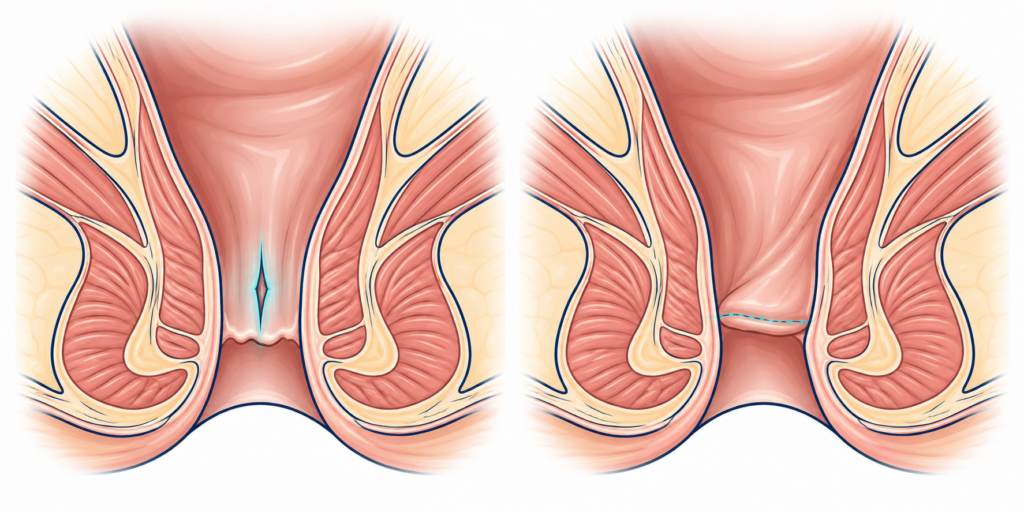
An advancement flap anoplasty may be an alternative in certain situations.
The principle is to bring healthy, well-vascularised tissue over the fissure without performing the same sphincter division as in a sphincterotomy.
This option is not necessary for every chronic fissure.
It is particularly relevant when preserving sphincter function is an important concern.
Anal fissure or hemorrhoids?
Two conditions that are often confused
Patients frequently attribute any anal pain or bleeding to “hemorrhoids”.
However, the symptoms differ.
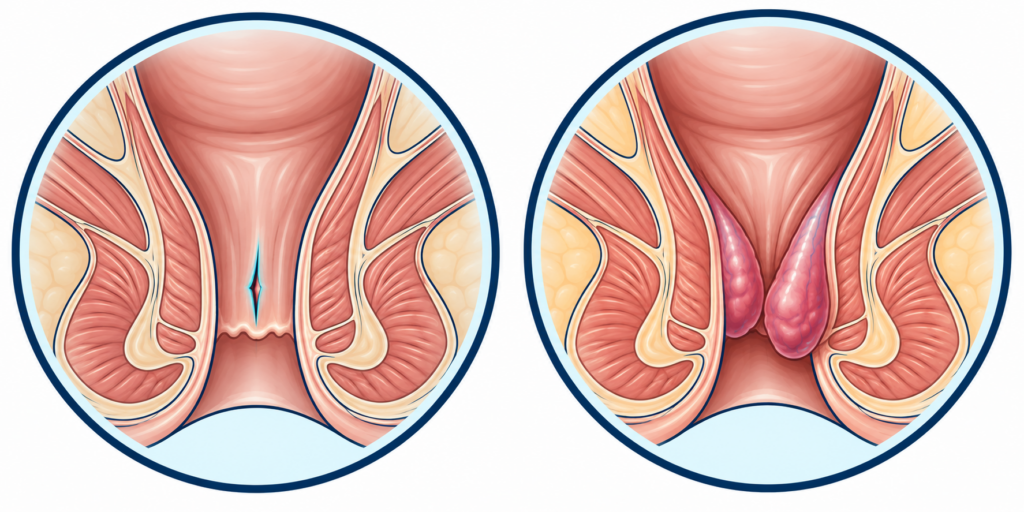
Anal fissure
Pain associated with bowel movements, which may persist afterwards, is particularly suggestive.
Hemorrhoidal disease
Internal hemorrhoids are more likely to cause bleeding and/or prolapse, without necessarily causing the intense pain characteristic of a fissure.
However, an external hemorrhoidal thrombosis can cause severe acute pain.
An examination can usually distinguish between the conditions.
Learn more about the symptoms and treatments of hemorrhoidal disease.
After treatment
Healing is gradual
Pain may improve before the fissure has completely healed.
It therefore remains important to maintain regular bowel habits even when symptoms begin to disappear.
After surgery, the return to activities depends on the procedure performed and the individual’s recovery.
The aims remain the same:
avoid traumatic stools, allow healing and reduce the risk of recurrence.
Even after healing, a fissure can recur, particularly following another episode of very hard stools or other local trauma.

When should you seek a consultation?
A consultation is particularly advisable if you have:
- significant pain during bowel movements;
- repeated or persistent pain;
- bleeding;
- symptoms that do not improve despite regulating bowel habits;
- recurrences;
- an unusual lesion;
- uncertainty about whether the cause is a fissure, hemorrhoids or another proctological condition.
Pain accompanied by fever, marked swelling or pus discharge requires assessment for another condition, particularly an abscess.
Care tailored to the mechanism of the fissure
Not every fissure requires an operation
The first aim of the consultation is to confirm the diagnosis.
The next step is to determine:
- whether the fissure is recent or chronic;
- whether bowel habits contribute to the problem;
- whether there is increased sphincter tone;
- whether medical treatments have already been used;
- whether any factors require particular attention to continence;
- and which strategy offers the best balance between healing and preservation of function.
Depending on the situation, care can therefore range from simple measures to regulate bowel habits to topical treatment, a botulinum toxin injection or selected surgery.
Dr Pierre Fournier
General and Visceral Surgery

Frequently asked questions
A recent fissure can heal when bowel habits are regulated and repeated trauma stops. Most acute fissures do not require surgery.
Sharp pain triggered by a bowel movement and potentially persisting afterwards is characteristic. A small amount of bright red bleeding may also occur.
Passing stool can trigger a prolonged contraction of the internal anal sphincter, contributing to persistent pain.
No. A fissure is a tear in the lining of the anal canal. Hemorrhoidal disease affects the hemorrhoidal vascular cushions. Both conditions can nevertheless cause bleeding.
Yes, depending on the situation. Treatments that temporarily reduce sphincter pressure may allow healing.
Some aim to temporarily relax the internal sphincter to improve local conditions for healing. Topical calcium channel blockers and nitrates are among the options described in the guidelines.
Their vasodilator action can cause headaches. This is one reason why other topical treatments may be preferred, depending on the situation.
It temporarily reduces internal sphincter activity to decrease increased muscle tone and allow the fissure to heal.
No. It acts on the muscle; the fissure must then heal gradually.
It is a controlled division of part of the internal anal sphincter, intended to produce a lasting reduction in increased sphincter tone.
It has very high healing rates in appropriately selected patients and remains the standard surgical treatment for many chronic fissures.
Because the sphincter contributes to continence. The expected benefit must therefore be weighed against the individual’s functional risk.
No. The essential principle of the procedure is to act in a controlled way on part of the internal sphincter to reduce the pressure that maintains the fissure.
Yes. An advancement flap procedure may be discussed for some patients in whom preserving sphincter function is particularly important.
An anal fissure does not turn into cancer. However, an atypical lesion or one that does not heal as expected should be reassessed to confirm the diagnosis.
Pain with every bowel movement?
Persistent anal pain should not automatically be considered a flare-up of hemorrhoids.
An examination can usually identify a fissure promptly and determine whether it can be treated conservatively or requires specific care.