
THYROID SURGERY
Thyroid Surgery
Specialized, individualized care for thyroid conditions, from evaluation to surgery when it is indicated.
The thyroid is a small gland located at the base of the neck, essential to the regulation of many bodily functions. Nodules, goiter, hyperthyroidism, or suspected cancer may require specialized evaluation. Surgery is not systematic: whether it is indicated depends on the nature of the condition, the results of investigations, and the patient’s individual situation.
The Thyroid: A Small Gland with an Essential Role
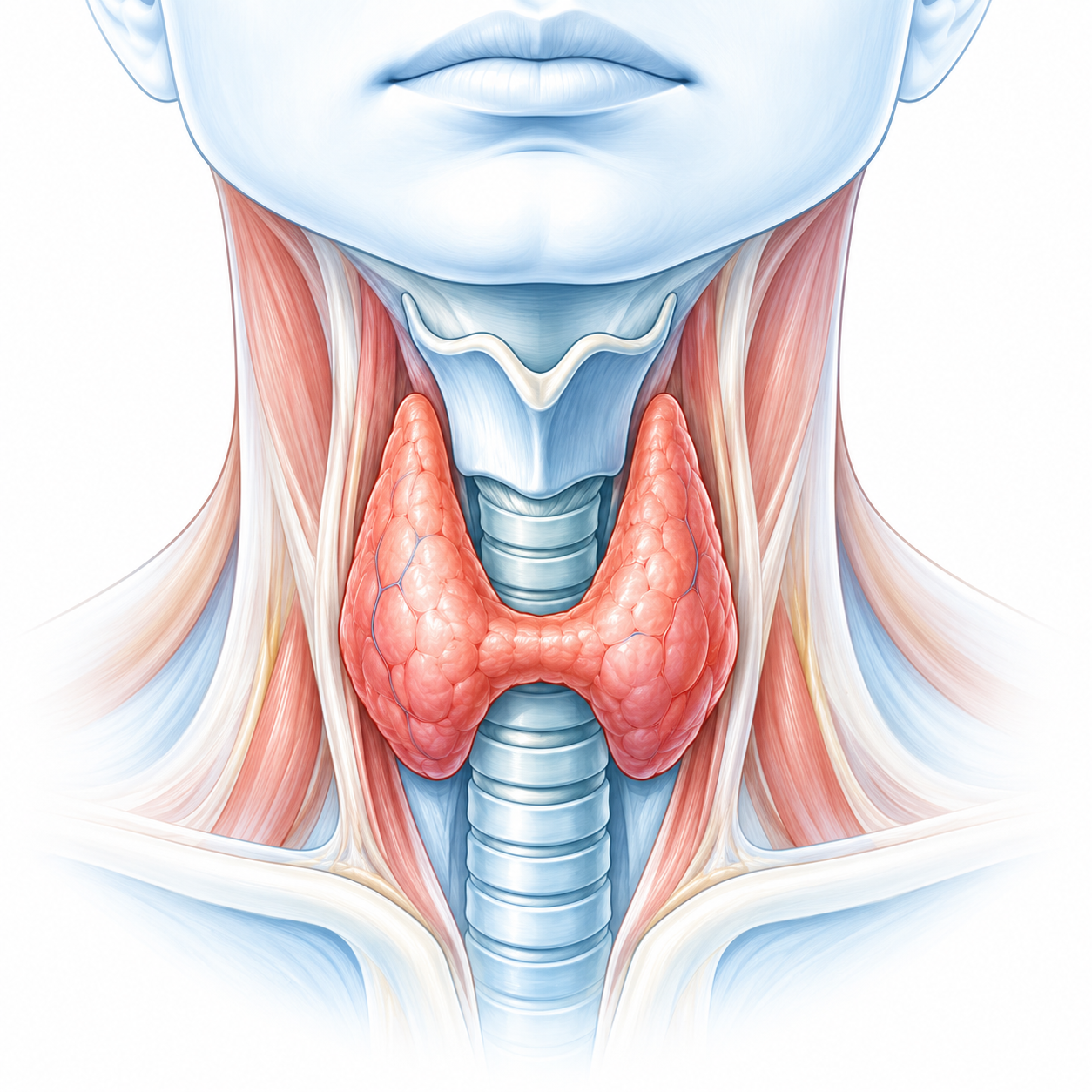
The thyroid is located at the front of the neck, in front of the trachea. It consists of two lobes connected by a central part called the isthmus.
It mainly produces thyroid hormones, which are involved in particular in regulating metabolism.
Many thyroid abnormalities can be monitored or treated medically without surgery. Surgery is considered in certain specific situations, after clinical evaluation and discussion of the different therapeutic options. Additional information on thyroid disease is available from the American Thyroid Association.
The Main Thyroid Conditions
Several situations may lead to a specialized evaluation.
Thyroid nodules. Nodules are common and, in the large majority of cases, do not necessarily require intervention. Their evaluation may combine clinical examination, ultrasound, blood tests and, when indicated, a fine-needle aspiration biopsy. The decision to monitor, investigate further, or operate depends on the characteristics of the nodule and the clinical context.
Goiter. An increase in thyroid volume can sometimes cause neck discomfort or compressive symptoms. The need for surgical treatment depends in particular on the size of the goiter, its progression, the symptoms, and how the gland is functioning.
Hyperthyroidism. Certain forms of hyperthyroidism may be treated surgically when this represents an appropriate option within the treatment strategy.
Cancer or suspected thyroid cancer. When a lesion is suspicious or when thyroid cancer is diagnosed, surgery may be one step in the treatment. The extent of the operation depends on the diagnosis and the clinical situation.
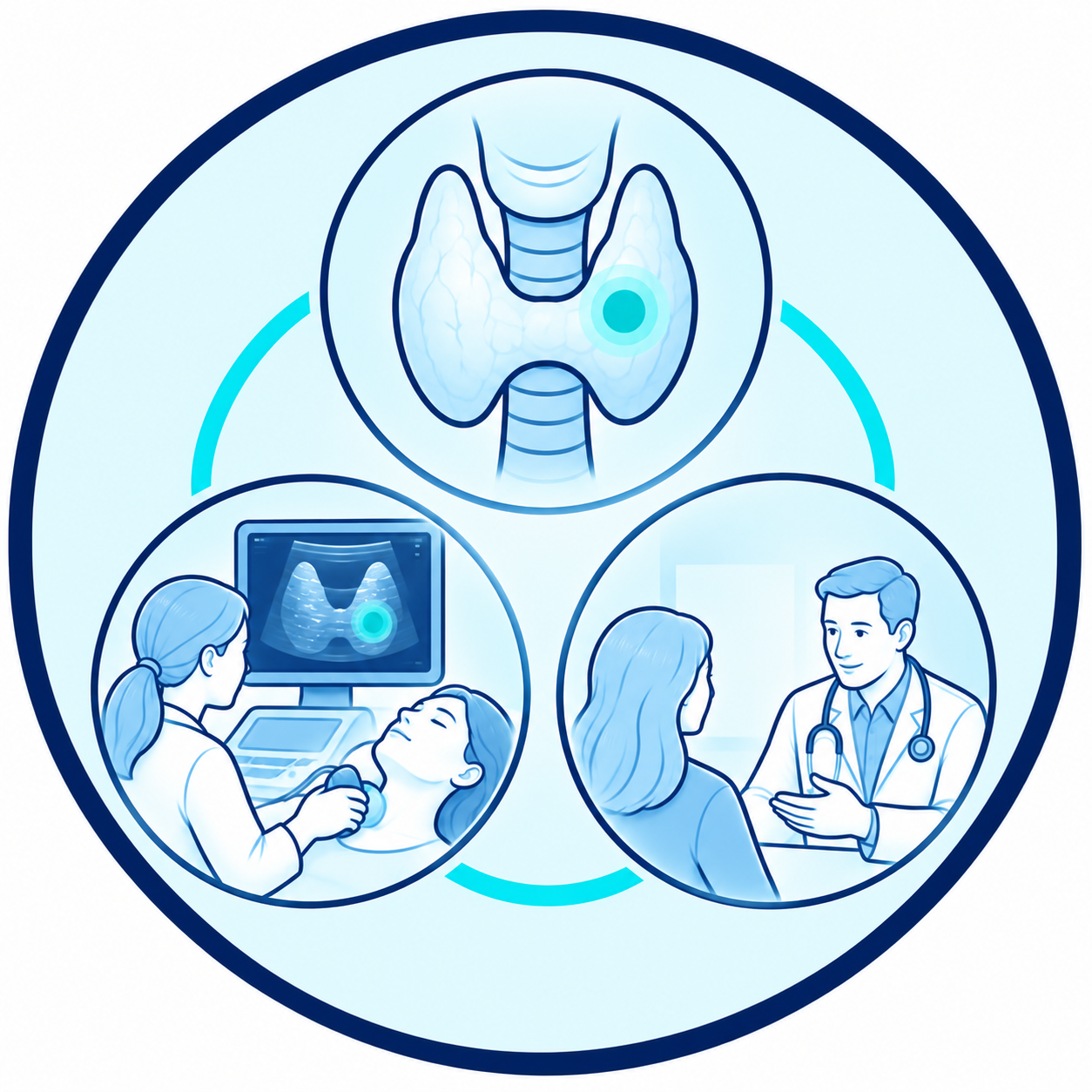

Dr Pierre Fournier and Dr Paulina Kuczma – coordinated care for thyroid conditions at GHOL.
Coordinated Care at GHOL
The management of a thyroid condition does not rely solely on a surgical procedure. It requires a comprehensive analysis combining, depending on the situation, clinical data, thyroid hormonal function, ultrasound, any cytological investigations, and surgical evaluation.
At GHOL, Dr Pierre Fournier works in collaboration with Dr Paulina Kuczma to integrate the different dimensions of thyroid conditions into the therapeutic approach.
This coordination makes it possible to assess the patient’s situation before determining the appropriate strategy: monitoring, medical treatment, further investigations, or surgery when indicated. The therapeutic decision remains individualized and is discussed with the patient.
When Is Thyroid Surgery Considered?
The indication for surgery depends on several factors that must be considered together. These may include: the nature and characteristics of a nodule; its progression; the result of any fine-needle aspiration biopsy; the size of the thyroid; compressive symptoms; hormonal function; a suspicion or diagnosis of cancer; the general medical context; and the patient’s individual situation.
The purpose of the surgical consultation is to explain why an operation is — or is not — indicated, its possible extent, as well as its expected benefits, limitations, and risks.

Lobectomy or Total Thyroidectomy
The extent of the surgery depends on the condition being treated.
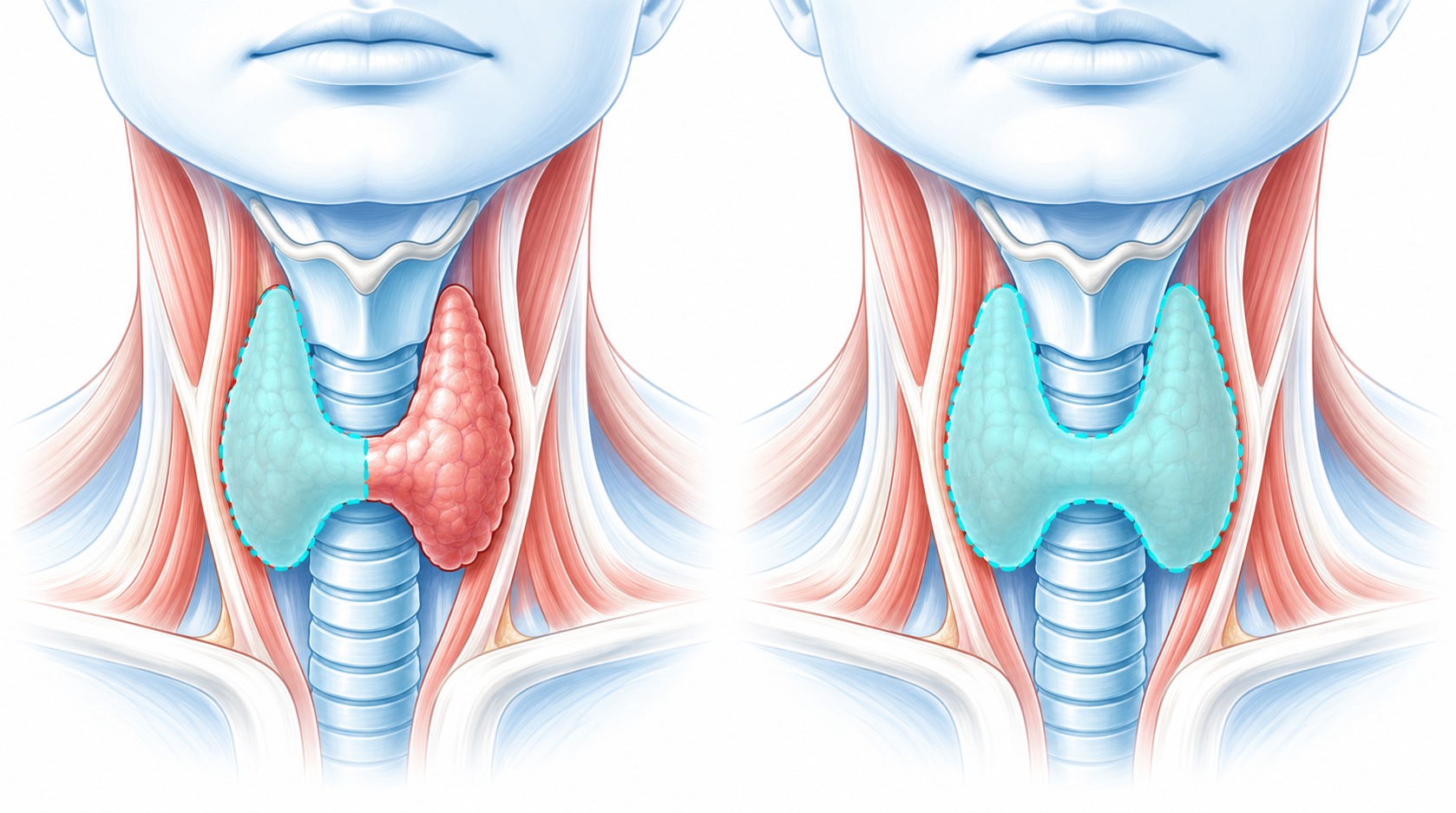
Thyroid lobectomy. This consists of removing one lobe of the thyroid, generally with the isthmus. It may be proposed for certain conditions limited to part of the gland, when the medical context allows it.
Total thyroidectomy. This consists of removing the entire thyroid gland. It may be indicated for certain bilateral conditions, certain goiters, certain forms of hyperthyroidism, or certain oncological situations.
The choice between these procedures is not based on a systematic preference for one over the other: it depends on the diagnosis and the individual situation.
Preserving the Structures Surrounding the Thyroid
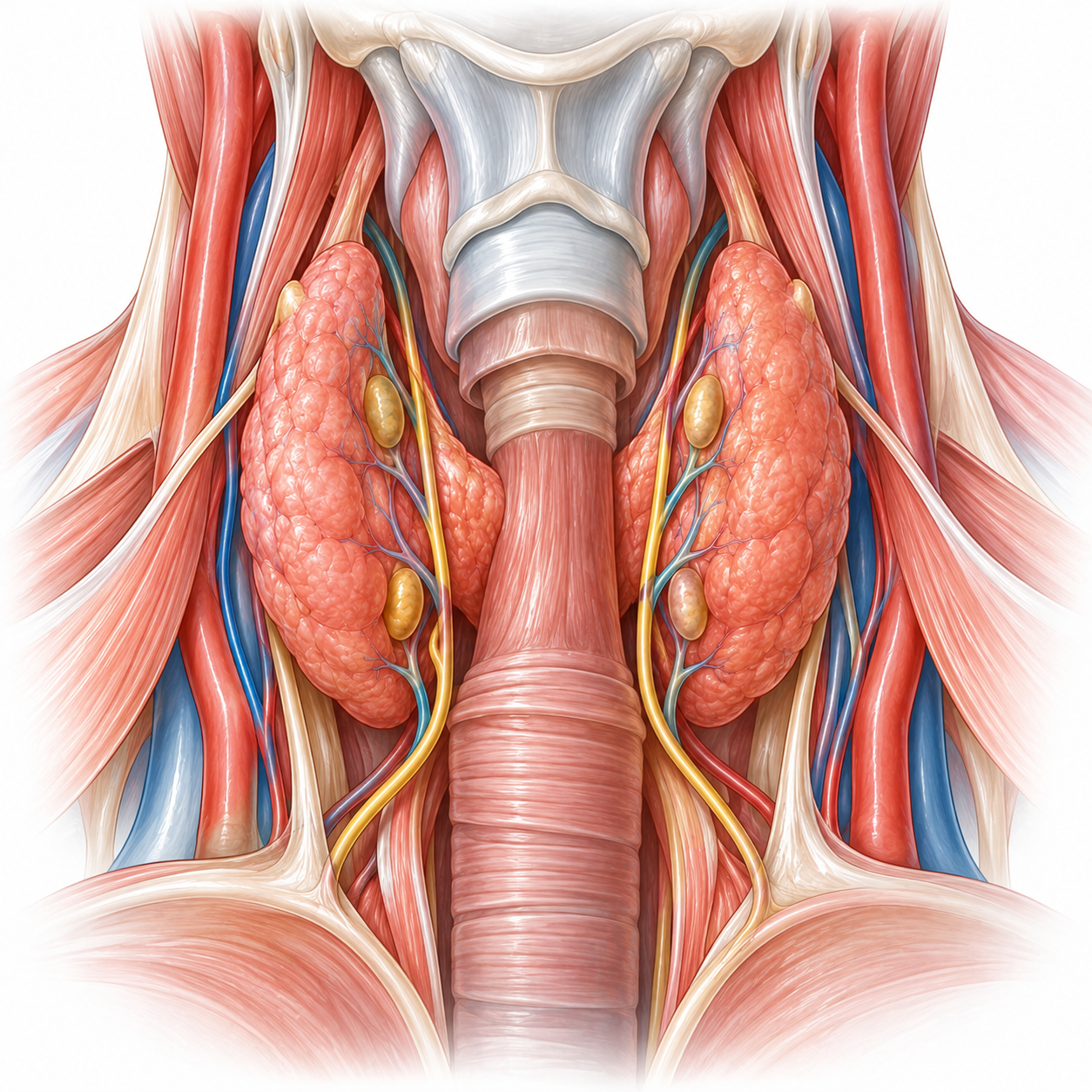
Thyroid surgery takes place in an anatomical region where several important structures are closely related to the gland. The recurrent laryngeal nerves run close to the posterior surface of the thyroid and play a role in vocal cord function. The parathyroid glands, generally located on the posterior surface of the thyroid, play an essential role in calcium regulation.
Identifying and preserving these structures is an important part of thyroid surgery. Before the operation, the specific risks are explained to the patient based on the procedure being considered and their personal situation.
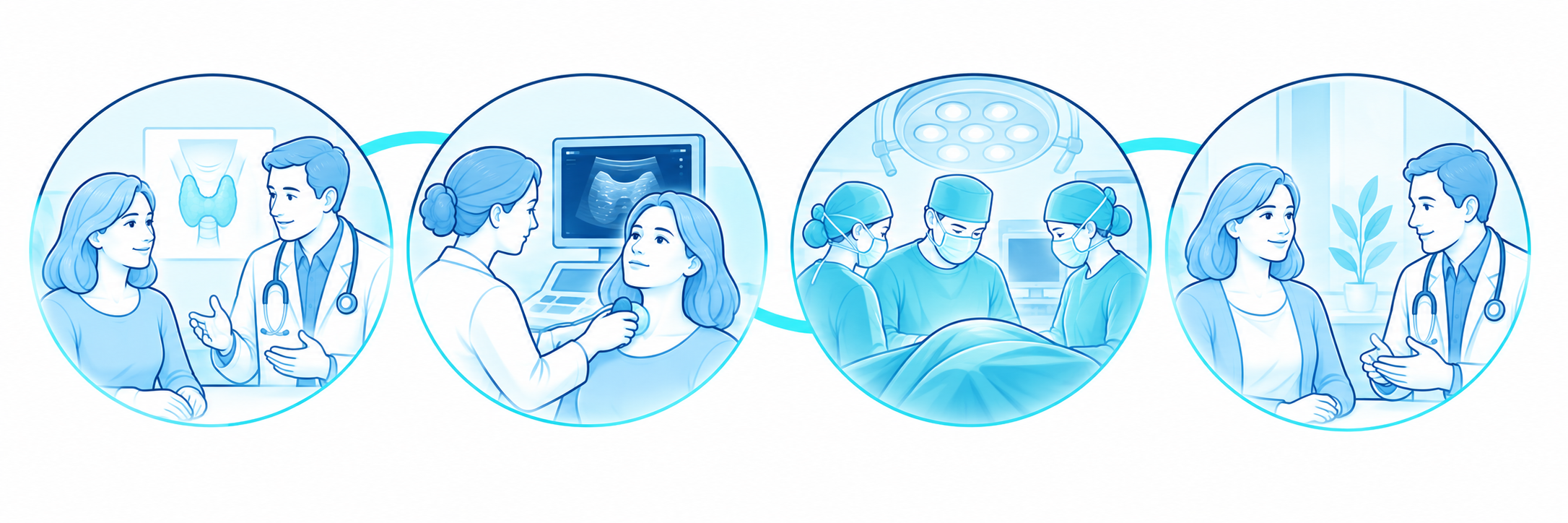
From Consultation to Post-Operative Follow-up
Consultation. This allows the diagnosis, any investigations already carried out, and the possible indication for surgery to be reviewed. The type of operation and its consequences are explained to the patient.
Preparation. The necessary tests are checked before the operation, and preparation is adapted to the patient’s medical context.
Surgery. It is performed according to the strategy defined before the operation and adapted to the surgical findings.
After surgery. Post-operative monitoring is carried out, and follow-up is adapted to the type of surgery and the condition treated. Depending on the situation, endocrinological follow-up and/or hormone replacement therapy may be necessary.
Follow-up After Surgery
Recovery depends in particular on the extent of the surgery, the diagnosis, and the patient’s situation. After a total thyroidectomy, thyroid hormone replacement therapy is necessary. After a lobectomy, the function of the remaining thyroid tissue may be assessed during follow-up to determine whether treatment is needed. Depending on the clinical situation, calcium monitoring may also be indicated after surgery. The precise details of follow-up are explained on an individual basis.
Frequently Asked Questions About Thyroid Surgery
No. Many nodules can simply be monitored. The indication for surgery depends on their characteristics, the investigations performed, and the clinical context.
A lobectomy removes a single lobe of the thyroid, generally with the isthmus. A total thyroidectomy removes the entire gland. The choice depends on the condition.
After a total thyroidectomy, hormone replacement therapy is necessary. After a lobectomy, this depends on the function of the remaining part of the thyroid.
The laryngeal nerves are located close to the thyroid. A change in voice can occur after surgery for various reasons, most often transient; nerve injury is a specific risk that must be explained before the operation.
On the contrary, the goal is to identify them and preserve their function when they can be spared. Their immediate proximity to the thyroid explains the particular attention given to them during the operation.
No. The consultation is precisely intended to assess the situation and determine whether surgery is indicated or whether another strategy is preferable.
Do You Have a Thyroid Condition or a Surgical Indication to Discuss?
A consultation allows your situation, any tests already performed, and the different care options to be reviewed.