
Parathyroid Surgery
Understanding hyperparathyroidism and offering appropriate care when surgery is indicated.
The parathyroid glands are small glands located near the thyroid. They play an essential role in calcium regulation through the production of parathyroid hormone (PTH). When one or more of these glands become abnormally active, calcium levels can rise and lead to various consequences for the body. A specialized evaluation helps identify the cause and determine whether surgical treatment is indicated.
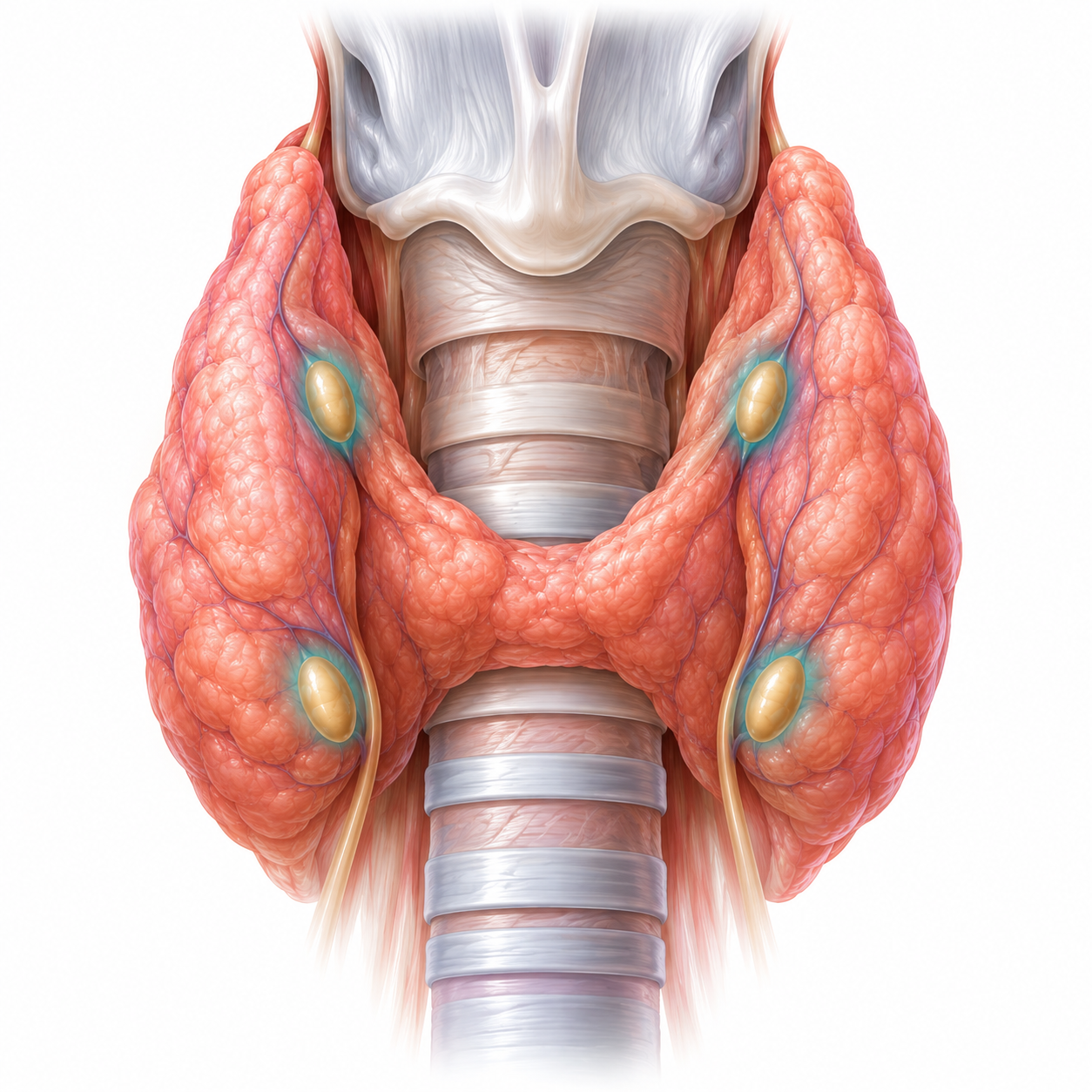
The Parathyroid Glands: Small Glands, Essential Role
The parathyroid glands are small endocrine glands distinct from the thyroid.
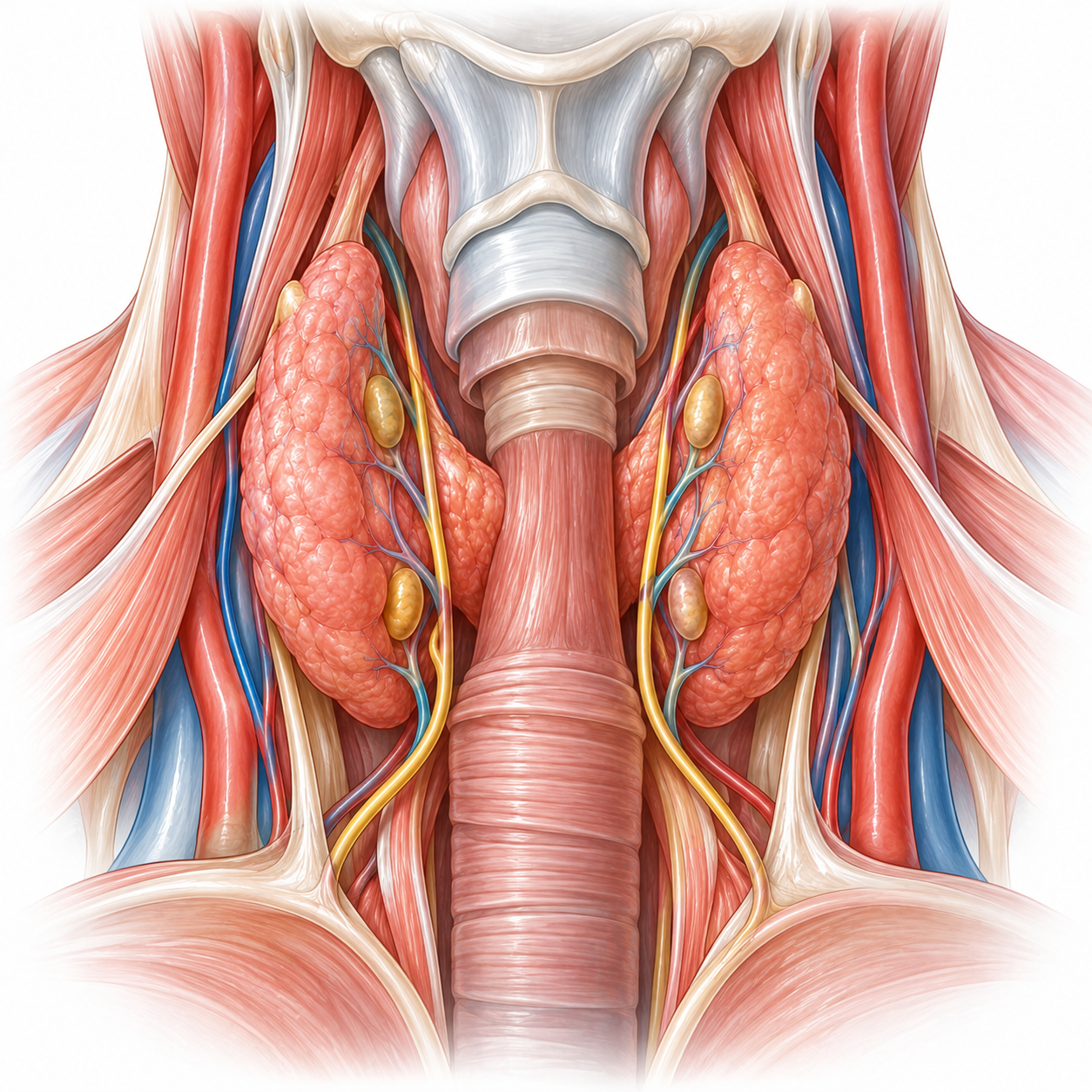
There are usually four of them, located near the posterior surface of the thyroid gland. Their number and location can vary from person to person.
They produce parathyroid hormone, also called PTH, a hormone that helps regulate calcium levels in the blood.
The function of the parathyroid glands is therefore closely linked to calcium balance in the body, notably through interaction with the bones, kidneys and vitamin D. The Endocrinology, Diabetology and Metabolism Department of the Geneva University Hospitals (HUG) offers additional information on parathyroid gland disorders.
PTH and Calcium Regulation
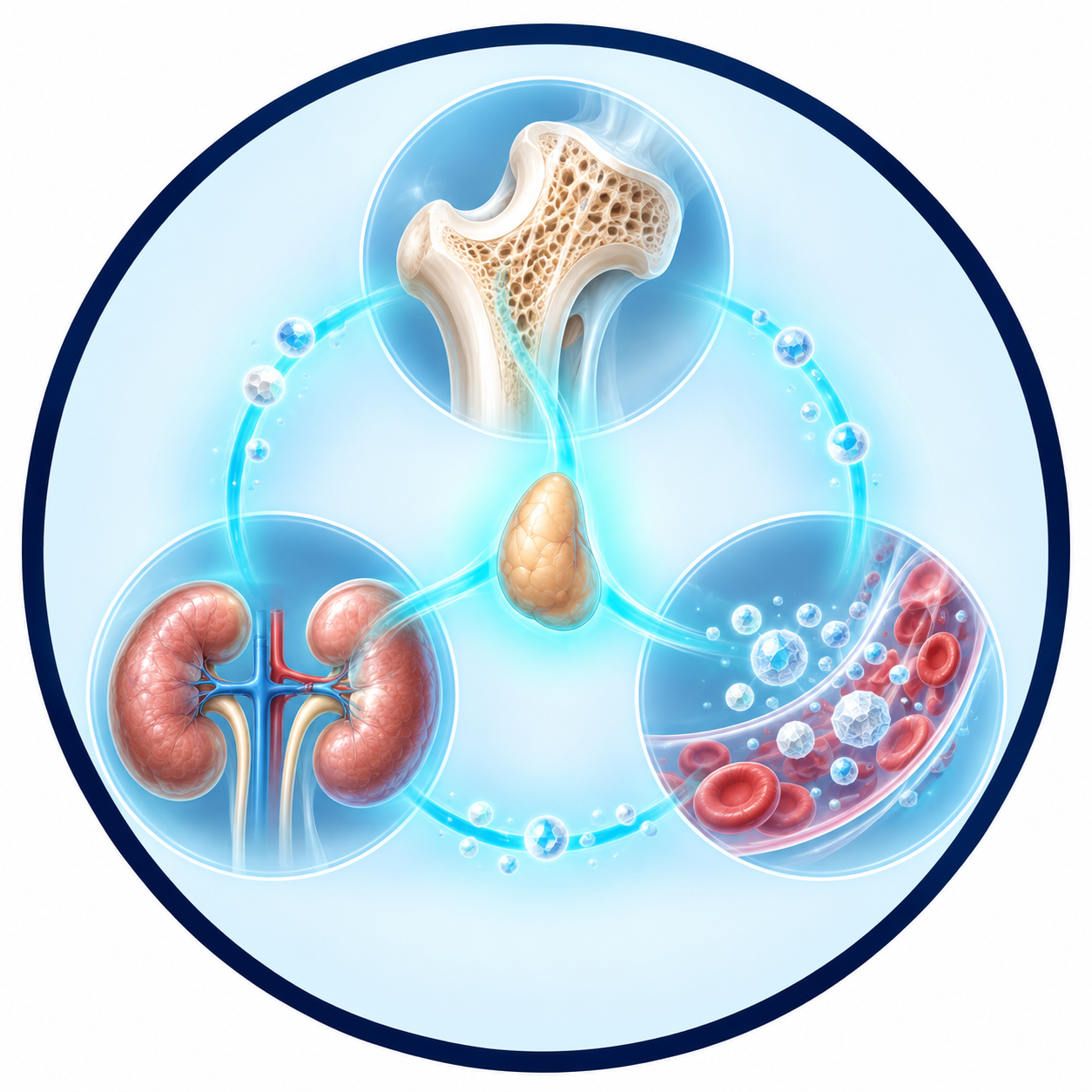
Parathyroid hormone helps maintain an appropriate concentration of calcium in the blood.
Calcium plays a role in numerous functions of the body, particularly through interaction with the bones, kidneys, intestine and vitamin D.
When PTH production becomes excessive, this balance can be disrupted.
When the Parathyroid Glands Produce Too Much PTH
Hyperparathyroidism refers to excessive production of parathyroid hormone.
In primary hyperparathyroidism, one or more parathyroid glands function excessively. This can lead to elevated blood calcium levels.
It is often related to an abnormality in a single gland, but several glands can be involved.
Other forms of hyperparathyroidism exist, particularly in certain kidney-related or metabolic contexts. Their management follows different mechanisms and indications.
It is therefore essential to precisely identify the type of hyperparathyroidism before considering treatment.
A Sometimes Discreet Condition
Hyperparathyroidism can be discovered during a blood test performed for another reason.
Some people have few or no symptoms; others may present general symptoms.
However, interpreting these manifestations requires placing them within the overall medical context.
The diagnosis is therefore not based on symptoms alone: laboratory tests play a central role.

Laboratory Testing Is Essential
The diagnosis is primarily based on laboratory tests.
Interpretation combines calcium and PTH values in particular, and may require other parameters depending on the clinical situation.
The assessment confirms the calcium-phosphate metabolism disorder and clarifies its context.
Depending on the situation, the evaluation may also take into account kidney function, vitamin D, bone impact or other additional tests.
Imaging alone does not establish the diagnosis of hyperparathyroidism. It is mainly used to locate one or more abnormal glands once a surgical indication has been established.
Imaging Helps Prepare the Surgical Strategy
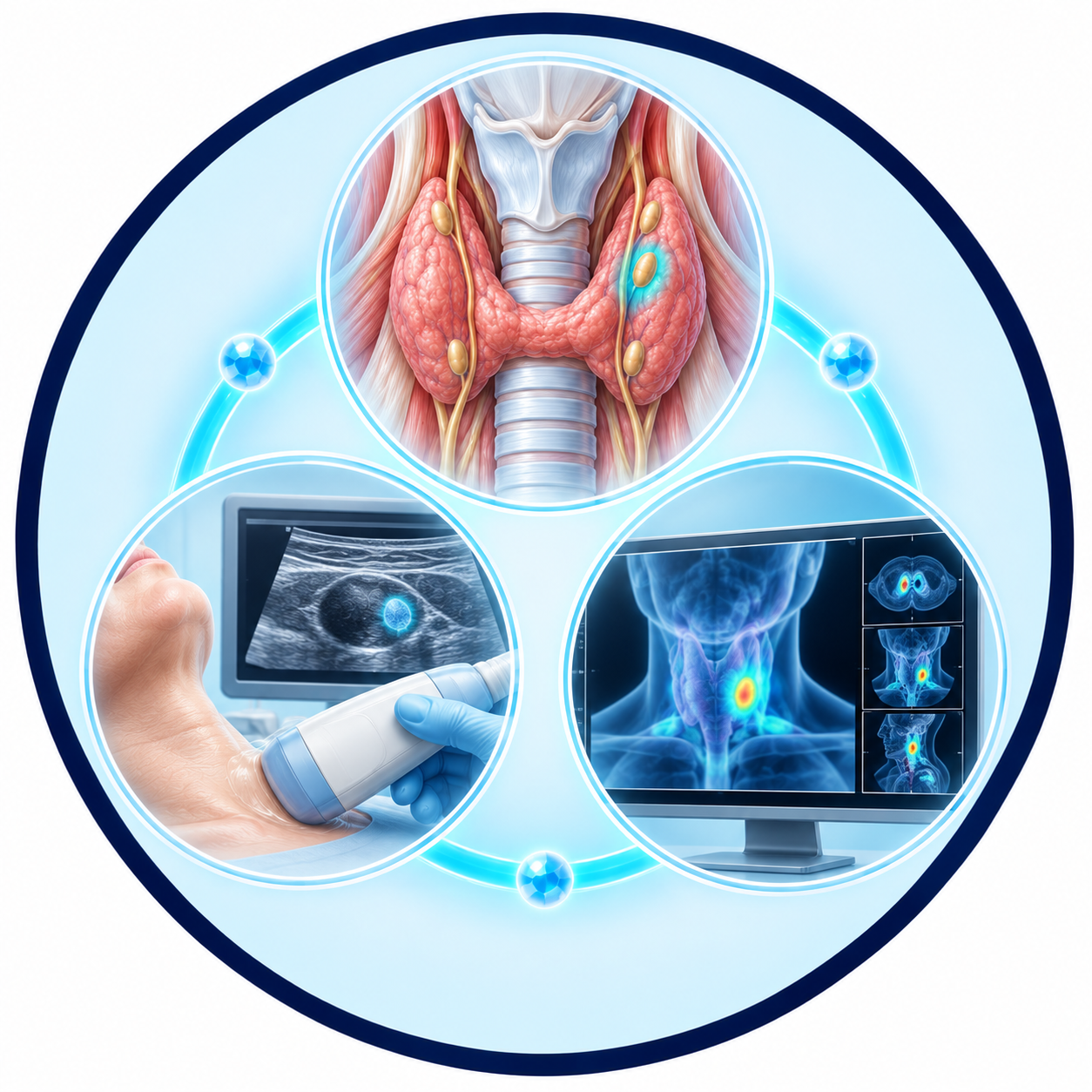
When surgery is indicated, imaging tests may be performed to help locate the responsible parathyroid gland(s).
Depending on the situation, different examinations may be used, including cervical ultrasound and certain functional or morphological imaging techniques.
The choice of tests depends on the clinical context and any investigations already performed.
Imaging that does not clearly locate an abnormal gland does not necessarily mean hyperparathyroidism is absent: the diagnosis remains primarily biological.
A Decision Based on the Full Assessment
The decision to operate is not based on a single test.
It takes into account the type of hyperparathyroidism, laboratory results, the patient’s age and situation, as well as any renal or bone consequences and the medical recommendations applicable to their case.
Care may require coordination between different medical specialties, notably within GHOL.
When surgery is indicated, the goal is to treat the gland(s) responsible for the oversecretion while preserving important cervical structures.
When Is Parathyroid Surgery Indicated?
The surgical indication depends on the type of hyperparathyroidism and the individual situation.
In primary hyperparathyroidism, surgery may be considered when it meets the medical criteria established based on biological, clinical, renal, bone and individual data.
Some people have symptoms or complications; others may have few apparent manifestations but still meet criteria justifying surgery.
The surgical consultation allows these factors to be reviewed and the expected benefits, alternatives and risks of the procedure to be explained to the patient.
A Procedure Adapted to the Anatomical Situation
The goal of surgery is to identify and remove the gland(s) responsible for excess PTH secretion.
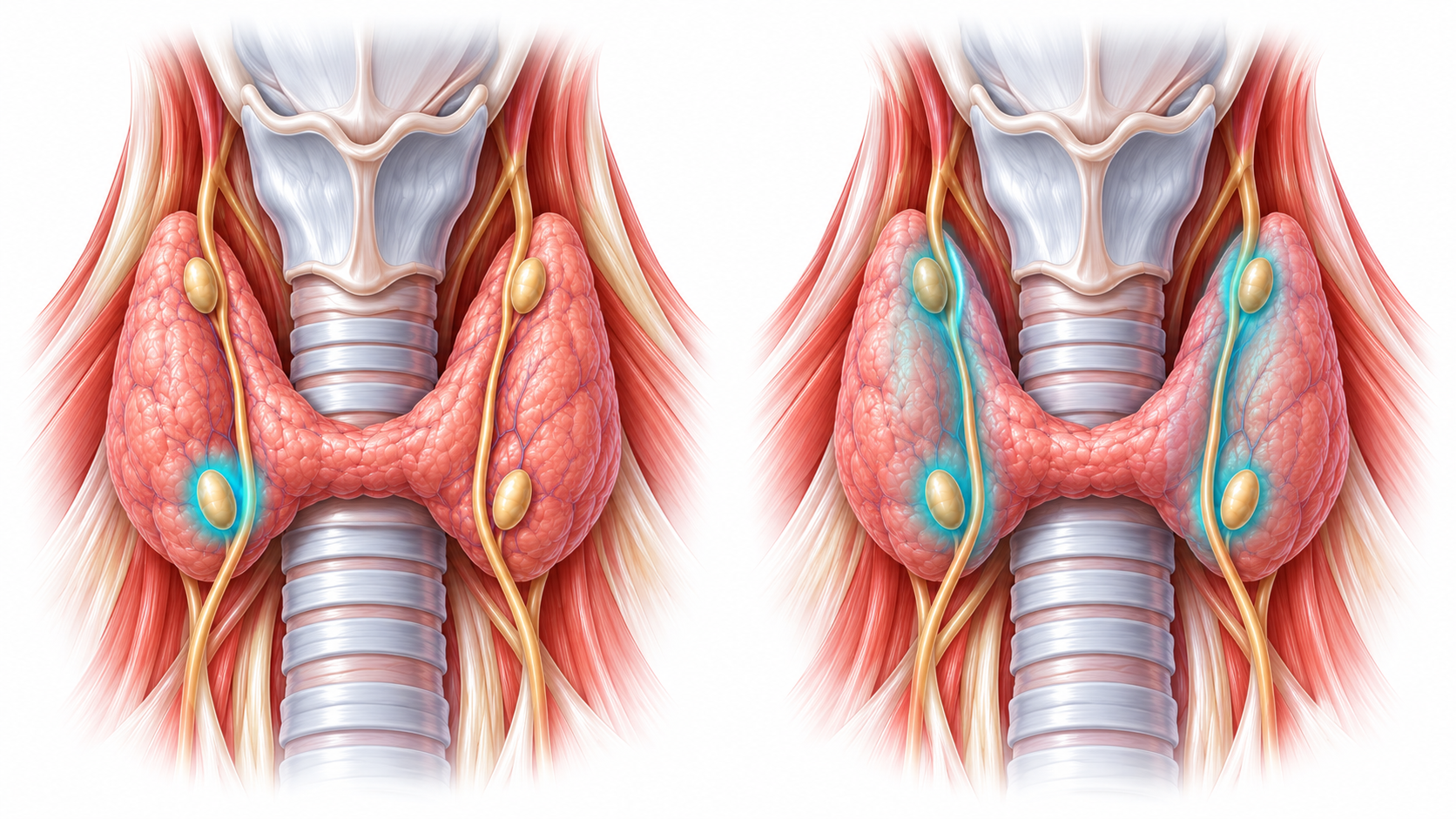
When the preoperative assessment suggests that a single gland is responsible and conditions are met, a targeted exploration may be considered.
In other situations, a wider cervical exploration may be necessary, particularly when involvement of several glands is suspected or when preoperative localization is not sufficiently consistent.
The surgical strategy is therefore adapted to the diagnosis, the assessment results and intraoperative findings.
A Cervical Anatomy That Demands Precision
The parathyroid glands are located in an anatomical region closely related to the thyroid and the recurrent laryngeal nerves.
These nerves are involved in vocal cord function and must be identified and preserved during surgery.
The location of the parathyroid glands can also vary from person to person, which makes anatomical knowledge an essential part of the procedure.
This same requirement for anatomical precision applies to thyroid surgery, in a region where the structures are closely intertwined.
Calcium Monitoring After Surgery
After the procedure, clinical and laboratory monitoring is carried out.
The decrease in PTH after removal of the overactive gland(s) can lead to a drop in blood calcium.
Calcium monitoring is therefore carried out, and supplementation may be necessary depending on the situation.
Follow-up arrangements depend in particular on the type of hyperparathyroidism, the procedure performed and postoperative biological progress.
Follow-up also helps verify the evolution of calcium and PTH levels.
From Diagnosis to Follow-up After the Procedure
Diagnosis. Consultation and biological confirmation of hyperparathyroidism.
Localization and preparation. Imaging once the surgical indication has been established, and preparation of the surgical strategy.
Procedure. An extremely sober representation of the surgical environment, carried out according to the strategy defined before the operation.
Follow-up. Clinical and laboratory monitoring, particularly of calcium and PTH.

Frequently Asked Questions About the Parathyroid Glands
Are the parathyroid glands part of the thyroid?
No. They are distinct glands. They are usually located near the posterior surface of the thyroid, but their function is different.
How many parathyroid glands do we have?
Usually four, but their number and location can vary.
What is PTH?
Parathyroid hormone, or PTH, is a hormone produced by the parathyroid glands that plays a major role in calcium regulation.
What is primary hyperparathyroidism?
It is excessive production of PTH related to abnormal functioning of one or more parathyroid glands. It may be accompanied by elevated blood calcium.
Does hyperparathyroidism always require surgery?
No. The indication depends on the type of hyperparathyroidism and various clinical, biological, renal, bone and individual criteria.
Can hyperparathyroidism be diagnosed with an ultrasound?
The diagnosis is mainly based on laboratory data, particularly the interpretation of calcium and PTH. Imaging is mainly used to locate the abnormal gland(s) when surgery is being considered.
Are all four parathyroid glands removed?
Not systematically. The extent of surgery depends on the type of hyperparathyroidism and the number of glands involved.
Why is calcium monitored after the operation?
Because calcium levels can decrease after surgery. Biological monitoring and, in some situations, supplementation may be necessary.
Hyperparathyroidism or a Surgical Indication to Discuss?
A consultation allows your assessment, any tests already performed, and the possible role of surgery to be reviewed.